


Temperature indicators for switchgear, busbars and transformers
A loose bolted joint or a corroded contact increases resistance and heats up. A Thermax strip stuck on the joint permanently records the highest temperature — even when nobody is standing at the cabinet.
Where hot spots in switchgear come from
The most common causes of local overheating are a bolt loosened by heating and cooling cycles, an oxidised contact surface, an overloaded outgoing feeder or unbalanced phase loads. Such a spot can heat up for weeks before it leads to a failure or a fire.
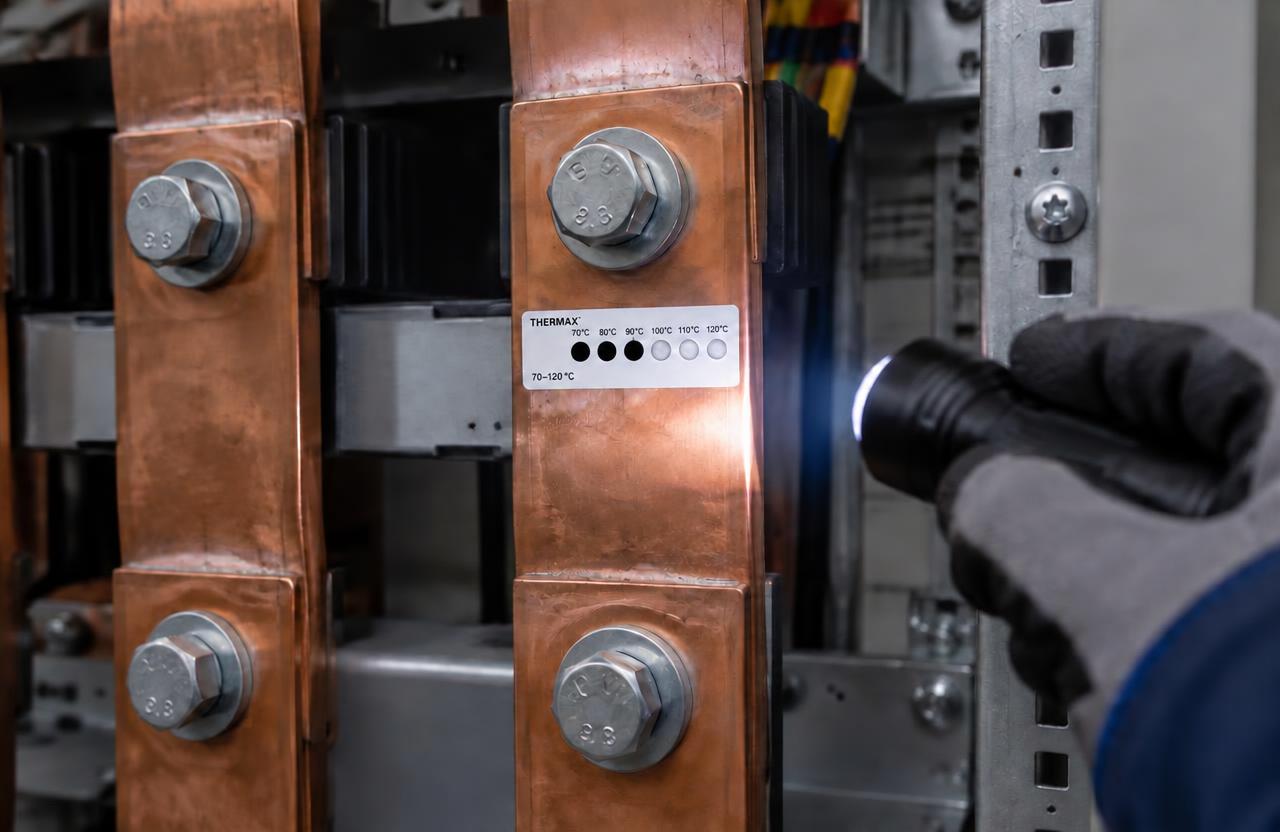
Where to apply Thermax strips
On components that heat up with a poor contact or overload:
- bolted joints of busbars and main bus bars
- terminals of circuit breakers, switch-disconnectors and fuse bases
- cable lugs and connection terminals
- terminals and housings of dry-type transformers
- capacitor banks, inverters and soft starters
Reading during a routine inspection round
A strip placed in a visible spot can be read through the inspection window or when the cabinet is opened for maintenance. You do not need to catch the moment of peak load: the blackened field remains even after the joint has cooled down.
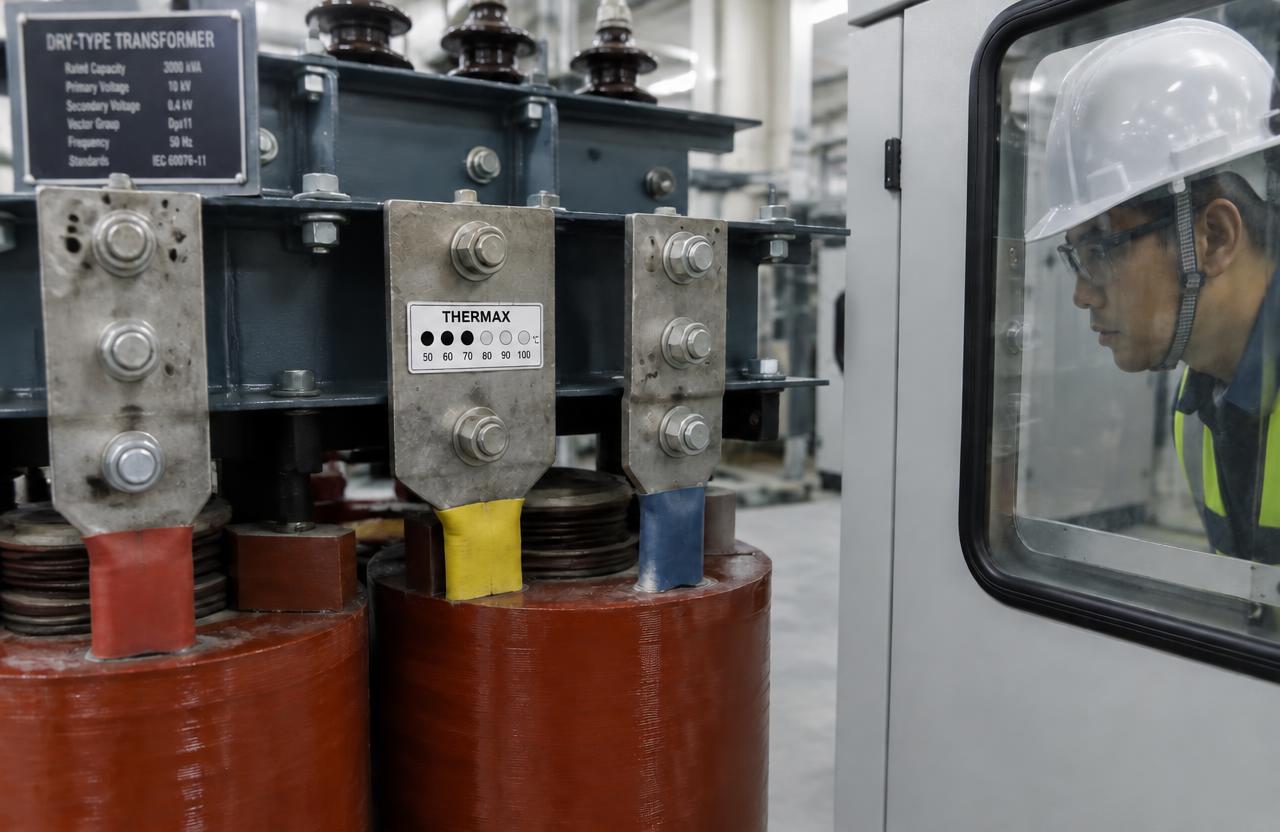
Strip, pyrometer or thermal imaging?
A thermal camera and a pyrometer show the temperature only at the moment of measurement and usually require access to a live cabinet. A Thermax strip works continuously, with no battery and no electronics, so it records the maximum between inspections. It works best as an inexpensive layer that complements periodic thermographic surveys.
How to choose the range
The range is matched to the permissible operating temperature of the component given by the equipment manufacturer. In switchgear, multi-point strips covering approximately 60–120 °C are the most common choice, so that both normal operation and an exceeded alarm threshold are visible.
Recommended products
Frequently asked questions
How can I detect an overheating joint in switchgear?
Stick a Thermax strip on the bolted joint or terminal. If the temperature exceeds the threshold of a field, that field turns permanently black. On the next inspection round you can see straight away which joint needs re-tightening or cleaning.
Can the strip be applied to a live component?
The strip is applied only after the circuit has been switched off and secured, in line with procedures for working on electrical equipment. Reading afterwards is visual and does not require touching any components.
Which strip range should I choose for busbars?
It depends on the permissible equipment temperature given by the manufacturer. Multi-point strips in the range of approximately 60–120 °C are the most common choice.
Does a strip replace a thermographic survey?
No. Thermal imaging shows the temperature distribution at the moment of measurement, while the strip records the maximum between measurements. Together they give a fuller picture of the condition of the joints.
Does the strip need power?
No. Thermax has no battery and no electronics, and the colour change is irreversible.
Ask about strips for switchgear
We will help you choose the ranges and prepare a quotation.