


FreezeSafe freeze indicators — protection against freezing in transport
Many medicines, vaccines, water-based paints and food products lose their properties after freezing — often without any visible sign. The irreversible SpotSee FreezeSafe indicator shows the recipient whether the temperature dropped below the threshold before they accept the delivery.

How FreezeSafe works and how to read it
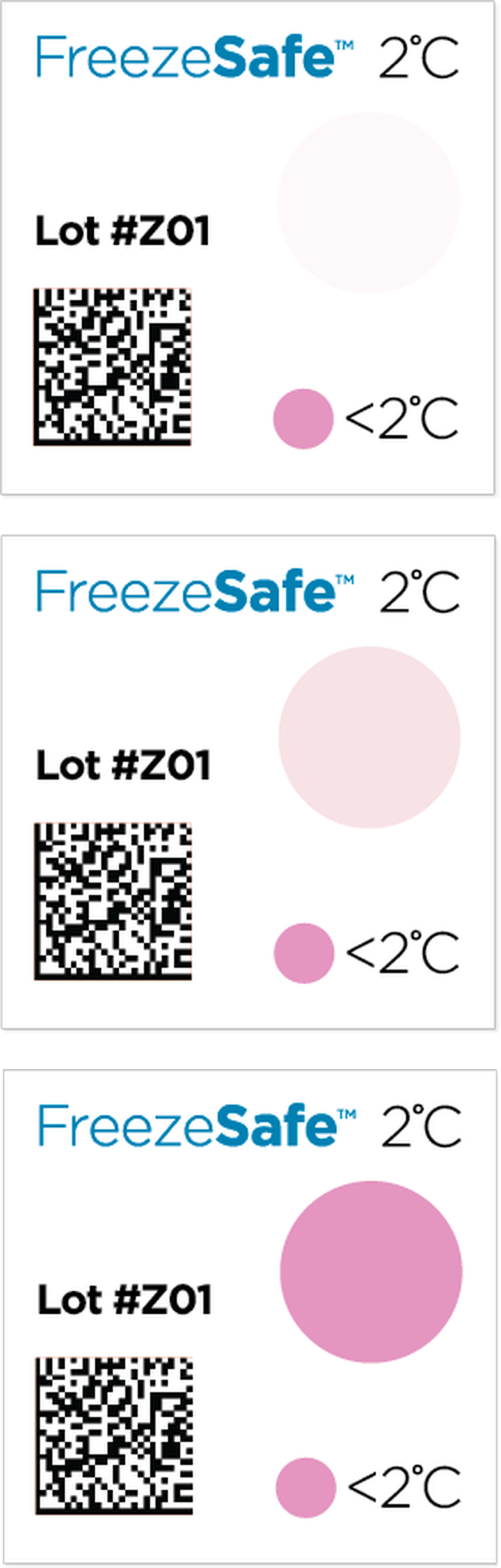
FreezeSafe has a large indicator dot and a small reference dot. The indicator is ready to use straight away — no activation, pull tabs or app required.
- Large dot lighter than the reference — the temperature did not drop below the threshold (OK)
- Large dot slightly pink but lighter than the reference — a short drop, shorter than the response time
- Large dot as dark as or darker than the reference — threshold exceeded (ALARM)
- Irreversible change: warming up later does not restore the colour
Thresholds and technical data
Data according to the SpotSee product sheet (rev. 05/2025):
- −3 °C (26 °F) — response within 120 min — P/N E01FRE0-3C01R1
- 0 °C (32 °F) — response within 60 min — P/N E01FRE000C02R1
- 2 °C (36 °F) — response within 90 min — P/N E01FRE002C02R1
- 5 °C (41 °F) — response within 120 min — P/N E01FRE05C01R1
- Accuracy: ±1 °C in the first year; +1 °C / −2 °C in the second year
- Size: 21 × 21 mm, thin flat profile, each indicator with a lot number
- Storage of unused indicators: 15–25 °C, away from light
Fitting in a shipment step by step
Place the indicator as close as possible to the protected product and where the recipient can see it.
- Peel the indicator off the liner and stick it to a clean, dry surface
- Apply it directly to the product or inside the insulated packaging
- Choose the spot most exposed to cold: next to coolant packs or the carton wall
- With the QR version, scan the code before dispatch to link the indicator to the shipment
Case study: medicines that must not freeze
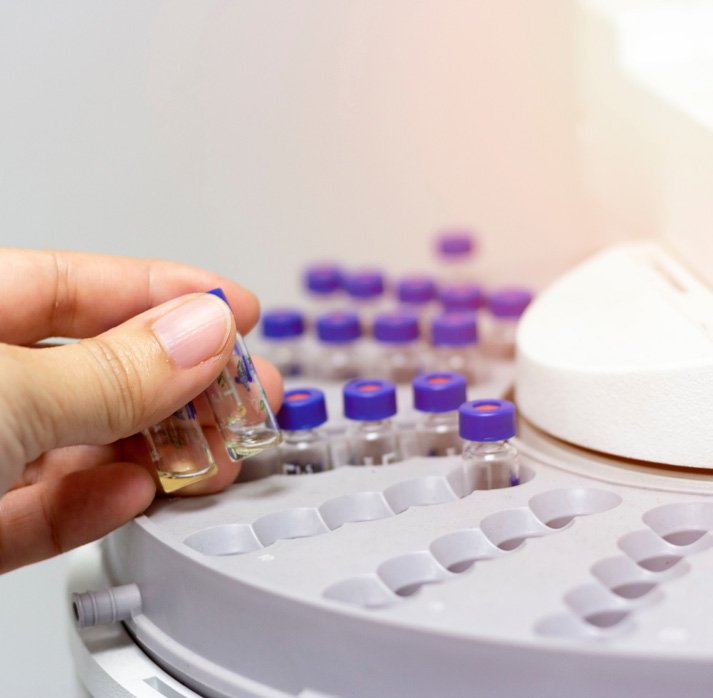
According to a SpotSee case study, many vaccines, biologics and other preparations lose their efficacy after freezing. Examples named by the manufacturer include adalimumab (HUMIRA®), dabigatran (Pradaxa), semaglutide (Wegovy) and insulin, which becomes inactive once frozen. A pharmacy, carer or patient cannot see this from the medicine's appearance — FreezeSafe gives a simple decision: accept or reject.
- Single-use indicator, applied at dispatch and read on receipt
- Clear evidence for claims and quality (QA) documentation
- Low cost makes it possible to label every shipment, not just selected ones
Where freeze indicators are used
Wherever too low a temperature damages a product physically or chemically:
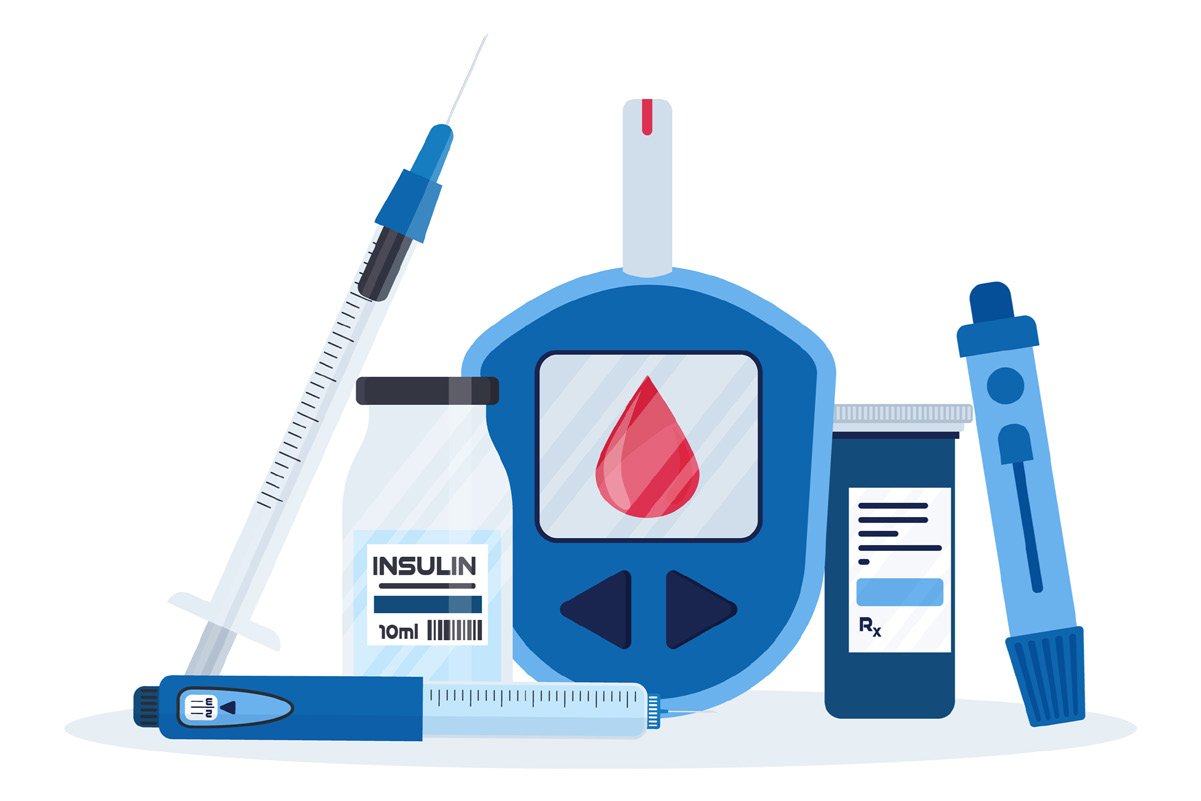
- Pharma and medicine: vaccines, insulins, biologics, blood, plasma, laboratory samples
- Chemicals: water-based paints, varnishes and adhesives, emulsions, reagents prone to crystallisation
- Cosmetics: creams and lotions shipped in winter
- Food and beverages: fresh fruit and vegetables, wine, craft beer, dairy
Watch the video
Manufacturer's video
Recommended products
Frequently asked questions
How do I check whether a shipment has frozen?
Apply a FreezeSafe indicator to the product or inside the packaging before dispatch. If the temperature drops below the threshold for the specified time, the large dot permanently turns magenta. The recipient compares it with the small reference dot: a dot as dark or darker means the threshold was exceeded.
How does the FreezeSafe freeze indicator work?
FreezeSafe is a single-use low-temperature indicator. It needs no activation, batteries or app. After a drop below the threshold (−3, 0, 2 or 5 °C) it changes from clear to magenta within 60–120 minutes. The change is irreversible — warming up does not restore the original colour.
Which temperature indicator should I use for shipping vaccines and medicines?
For medicines stored at 2–8 °C that must not freeze (vaccines, insulin, biologics), FreezeSafe 0 °C or 2 °C is usually used. To monitor excursions upwards, it is combined with a WarmMark indicator or a temperature data logger.
How do I protect water-based paints and adhesives from freezing in transport?
Apply FreezeSafe 0 °C or −3 °C to the outer case or pallet. Freezing makes an emulsion separate, so the indicator colour tells the recipient right away whether to accept the delivery or file a claim with the carrier.
What is the difference between FreezeSafe and FreezeSafe QR?
Both work the same way and are read visually. The QR version also has a code that is scanned with a smartphone — the result with serial number and photo goes to the SpotSee cloud, which simplifies documentation and claims.
How should unused FreezeSafe indicators be stored?
At 15–25 °C, away from direct light. Unused indicators must not be stored in a fridge or freezer, as they would activate.
Ask about FreezeSafe indicators
We will help you choose the thresholds and prepare a quotation.